
Ukraine’s trade real estate market in the first half of 2025: a change in consumer priorities and the impact of internal migration
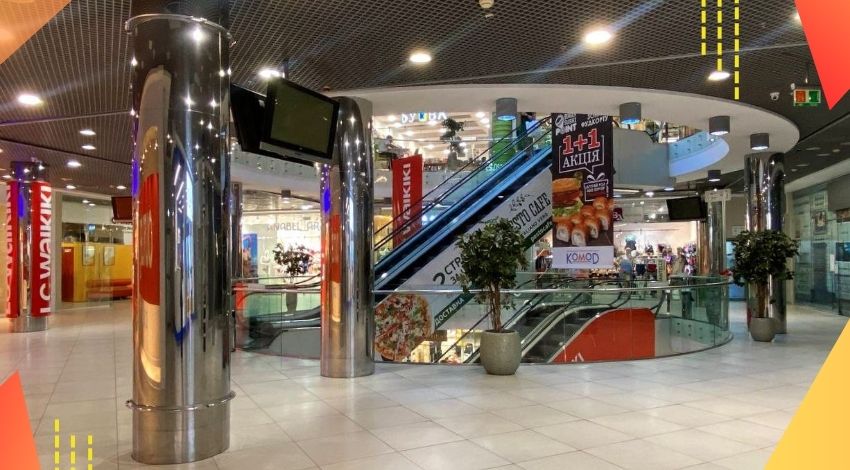
In the first half of 2025, the Ukrainian trade real estate market was characterized by a combination of positive growth dynamics with structural changes in consumer behavior and geography of trade activity. The key factors of development were the internal migration of the population, the change of consumer priorities and the active development of regional markets, especially in the western part of the country. At the same time, the market continues to adapt to new realities related to wartime restrictions and the transformation of consumer habits of Ukrainians. Property Times dealt with the experts who took place in the trade real estate market in the first half of the year.
Macroeconomic indicators and consumer moods
Evgenia Loktionova, Director of the UTG company notes positive dynamics: the turnover of retail trade of Ukraine in January-April 2025 increased both in national currency (+20.33%) and in dollar equivalent (+14.05%). This indicates the sustainability of the Ukrainian market and its ability to restore.
Diana Kvitchuk, Head of the CBRE Ukraine Marketing and Research Department, adds important details of consumer sentiment: “As of May 2025, according to Info sapiens, the consumer mood index was 79.3 pp (+6.7 pp. Since the beginning of the year), which indicates their gradual recovery, especially in the short-term perspective”. According to her, although inflation was ahead of the increase in nominal wage, real wages continued to grow, which contributed to the maintenance of stable consumer demand.
According to Olena Zabuzhko, the Nhood Ukraine commercial director, all trends of this period are formed under the influence of economic, consumer and geopolitical factors and demonstrate a complex but dynamic picture. The expert emphasizes the key features of the period: the growth of lease rates under the influence of inflation and devaluation of the hryvnia, the stability of the market despite the decline in purchasing power, the return of international brands and the stimulating impact of domestic migration.
Olena Zabuzhko notes: “Despite the decrease in purchasing power, the market has reached pre-war levels.”
Regional features
Kyiv
Despite military risks and massive air attacks, Kyiv demonstrates stability. Diana Kvitchuk comments: “In the 1st half of 2025, the market for trade real estate in Kiev remained stable, and the key figures have almost not changed since the beginning of the year. The activity of retailers has developed at a moderate rate, focusing mainly on the most effective shopping centers with high visits and stable turnover.”
At the same time, the expert captures the caution of international players: “Despite the moderate situation in the retail, no new international fashion brand was released to the market. In particular, the IKEA Swedish retailer has announced that it does not plan to return to Ukraine in the near future, because of the safety reasoning and the careful position that some world players still occupy.”
The key trend of the capital market was the revitalization of existing objects. According to Diana Kvitchuk, in 2025 the tendency to revitalize existing trading facilities, which began in 2023-2024, continues. Developers focus on the renovation of shopping centers, adapt them to new tenants formats and changes in consumption models.
Transcarpathia
The situation in the western regions of Ukraine is interesting. Volodymyr Chekalov, CEO of Urban-X, tells about the dynamic development of the Trade Real Estate Market: “Trade real estate market of Transcarpathia, especially in Uzhgorod and Mukachevo demonstrates steady growth against the background of active influx of IDPs, increased purchasing power.
Among the key trends of the region, the expert identifies:
Developers boom in residential areas – active construction of the largest number of commercial areas in Novyi, Bozdosh neighborhoods;
Consumption decentralization – the main demand is shifting from the center to the residential areas;
Investment inflows – new investors are coming to the region who are looking for profitable projects with minimal military risks. The share of transactions with the involvement of both local and national capital is increasing before the commissioning of objects.
Changes in consumer behavior
Evgenia Loktionova notes important shifts in consumer priorities: “Since the excitement of the population of the population to counteract the effects of war (clogging of canned food, medicines, hygiene, military goods, solar panels, charging stations, generators, autonomous, brows. They return to clothing and shoes stores.”
At the same time, the expert notes the specific restrictions: “The market continues to have the impact of the consequences of pandemic (remote work) and curfew – a limited need for everyday and elegant clothing.” In parallel, the UTG company captures a high level of attitude of Ukrainians to entertainment and consumption of savings as tools for counteracting stress and negative news (shopping, entertainment, restaurants).
Olena Zabuzhko identifies several key trends in consumer behavior:
Rationalization of shopping
Consumers have become more cautious in costs, focused on functional and basic products. The popularity of their own brands, stocks and loyalty programs is increasing.
Omnichannel and digitalization
Buyers expect a single online experience and offline: Order online with offline pickup, mobile applications, self -removal, fast delivery.
Changing visit motivation
“People come not only for purchases, but for experience, emotions, service,” Olena Zabuzhko explains. Demand for food, recreation areas, children’s spaces, events is increasing.
In Transcarpathia, according to Volodymyr Chekalov, the specificity of consumer behavior is also recorded: “In the first half of 2025, the consumer behavior of the Transcarpathians remained pragmatic and focused on basic needs. Expenses have become even more rational – buyers clearly plan purchases, look for favorable offers.”
The expert notes the growing popularity of “near home” formats through saving time and transport. IDPs continue to demand for available Fashion and baby products. The SCs visit the targeted, without long stay, with the main interest in the product, Drogerie and the Fast Food formats.
This has led to specific changes in the work of shopping centers of the region: increasing interest in small areas with high traffic, tenant mix emphasis on FMCG, pharmacy and food segments, expectation of brands entering while delaying launches due to lack of quality areas.
Attendance and vacancy
According to the UTG company, the trading centers continues to recover and in July 2025 amounted to 393 people per 1 000 square meters GLA. Evgenia Loktionova notes that the most stable are the centers of the district format with goods of daily demand – 670 people per 1 000 square meters GLA, while 522 persons are shown in the SC of district format and 315 people for region SCs.
Diana Kvitchuk adds important details in the capital’s market: “Against the backdrop of stable consumer demand, there was a positive dynamics of attendance of shopping malls, which began to be restored yet in 2024 and has become a steady trend today. This was facilitated by the reduction of operating breaks in the operation of shopping malls related to the threats of rocket attacks. Thus, according to USCS, as of the end of June 2025, in Kiev by train the time of operation of trading facilities decreased the share of the duration of air alarm, making 1.7% (- 1.3 pp from the beginning of the year).”
“The positive dynamics of attendance led to a reduction in vacancy to 12.9% in July 2025. The lowest level of vacancy is observed in district formats – 6.6%,” – such data is cited by Evgenia Loktionova.
Active categories of tenants
Product retail
According to Volodymyr Chekalov, the grocery continues to demonstrate high dynamics. Particularly active are the network “Shop near Home” – VAM, Ambar, Twin, ALMA, as well as large national operators of ATB and Silpo.
This trend is also characteristic of the capital’s market: “In the first half of 2025 in Kiev, the most active remained retailers and segment of equipment and electronics, which demonstrated stable discoveries and invested in the renewal of trade space,” – comments Diana Kvitchuk.
Fashion segment
Volodymyr Chekalov notes the formation of new demand in the Fashion segment, but notes the lack of squares: “Sinsay, Famo and Andi brands are most actively developing due to their flexibility. At the same time, a number of powerful international operators expect large, modern shopping centers.”
Diana Kvitchuk notes a more cautious approach of Ukrainian fashion brands in the capital: “Ukrainian Fashion brands acted more carefully, limited to single new projects in the capital, where the latter also showed more focus on locations in the regions.”
“Fashion brands continue to develop in high traffic SECs, despite the overall decrease in demand. The modern consumer focuses on functional and basic products,” – adds Olena Zabuzhko.
Drugstores and pharmacies
Volodymyr Chekalov notes the activity of these segments in the western region: “Kopiyochka, Shchodnya, Podorozhnyk, Apteka optovykh tsin, 911 networks remain active players in the market, with focus in the bedroom areas.” At the same time, the expert notes: “Spring changes in the state regulation of the pharmaceutical sector have somewhat slowed the pace of expansion of individual pharmacy operators.”
HoReCa and services
According to Volodymyr Chekalov, active development is demonstrated by coffee shops, bakeries, fast food with focus for accommodation near residential complexes on pedestrian traffic. The expert separates the fitness industry: “The segment demonstrates the potential of growth. A striking example is the announced opening of Sport Life in the new Uzhgorod area, next to the future second McDonald’s.”
Other categories
CBRE also captures the activity of the engineering segment and electronics, which showed stable discoveries and invested in the upgrade of trading spaces, while segments of home goods and DIY acted more carefully.
Rental rates and working conditions
Evgenia Loktionova reports a gradual increase in lease rates due to a reduction in vacancy – in July 2025 for the premises of a trade gallery with an area of 50-200 square meters pond amounted to $ 22.2 per 1 square meter (excluding % PTO, OPEX, VAT, KP).
Diana Kvitchuk provides detailed information about the capital’s market: “As of the end of the first half of 2025, the average vacancy in the Kiev market has remained generally stable at 11-12%, with a gradual trend to decrease in the best trading facilities, and in some objects is at a “technical” level 2-3%.”
Regarding the lease rates in Kiev, the expert notes: “The lease rates have not undergone significant changes since the beginning of the year, where the prime stands for a typical trade gallery with an area of 100-200 square meters in the best objects ranged from $ 40-70/sq. m/month (0% since the beginning of the year), while in other objects-within $ 18-38/sq. m/month”.
A specific situation has developed in Transcarpathia with regard to rental rates. Volodymyr Chekalov explains: “In the first half of 2025, the commercial real estate lease market in Transcarpathia, especially in Uzhgorod, demonstrates uneven price increase in prices due to high demand, limited supply and local specificity. The shortage of quality retail space has led to an increase in rental rates. In the popular areas of Uzhgorod, the average rates increased by 5-10% compared to 2024:
$ 15-20 per square meter for struts on active streets,
up to $ 60 per square meter on the central streets with the highest traffic,
$ 5-60 per square meter in new complexes or projects with high traffic.”
The expert notes the peculiarities of contractual relations: “Such objects often use mixed payment models (minimum fixed rate + % of turnover), binding to the hryvnia with limited indexing, distribution of repair costs and launch between the landlord and the tenant.” For family retailers, developers are ready to offer individual conditions: deeper discounts, coverage of Fit-Out costs, or marketing support.
Olena Zabuzhko notes the general trend: “There is an increase in rental rates under the influence of inflation and devaluation of the hryvnia.”
New discoveries and prospects
Kyiv and region
In April 2025, the BalticSky SC of district format opened 10 000 square meters in Kyiv, but it did not significantly affect the overall supply of retail space.
According to Diana Kvitchuk, in the first half of 2025, the total volume of competitive offer remained unchanged and was about 1.6 million square meters. At the same time, the expert notes the key perspective: “According to the statements of developers, the opening of the Ocean Mall (GLA 110 000 sq. m) is planned for the fall of 2025, which will be a potentially significant addition to the market.”
According to the UTG company, in 2025-2026, openings are also expected:
White Lines (1, Vasylkivska St.) – 28 000 square meters,
Olympik Park (Bazhana Avenue) – 23 000 square meters,
SEC Svitlo Mall (1, Capital Highway) – 12 500 square meters.
Regional markets
Diana Kvitchuk characterizes the situation in the regions: “From the regions in the first half of 2025, high-quality SCs were not put into operation. However, the forecasts for the 2nd half of the year 2025-2026 are more positive: expected to put into operation more than 240 000 square meters new retail space in the largest regional cities of Ukraine.”
According to the data made by Volodymyr Chekalov, the opening of six important objects with a total area of more than 50 000 square meters is planned in Transcarpathia by the end of 2025:
SEC Grushevsky (Uzhgorod) – 4 000 square meters,
SEC Dream City (Uzhgorod) – 8 000 square meters,
SEC KORONA (Uzhgorod) – 10 500 square meters,
Retail-Park Mukachevo (Mukachevo) – 8 900 square meters,
Retail-Park Zagrava (Beregovo) – 8 000 square meters,
SC Rosvigovsky (Mukachevo) – 8 500 square meters.
“Although the market of trade real estate has been stated for exit and traditionally large trading facilities, there is an increasing tendency to develop mixed formats integrated into residential and business complexes, as well as the emergence of compact regional trade spaces focused on local demand.”
“The expected introduction of new shopping malls in 2025 creates additional opportunities for development,” – sums up Olena Zabuzhko. At the same time, the success of new projects will depend on their ability to adapt to changed consumer habits and provide multifunctional experience for visitors.