
A new wave of enemy attacks: how is Ukrainian business adapting and what should be done next?
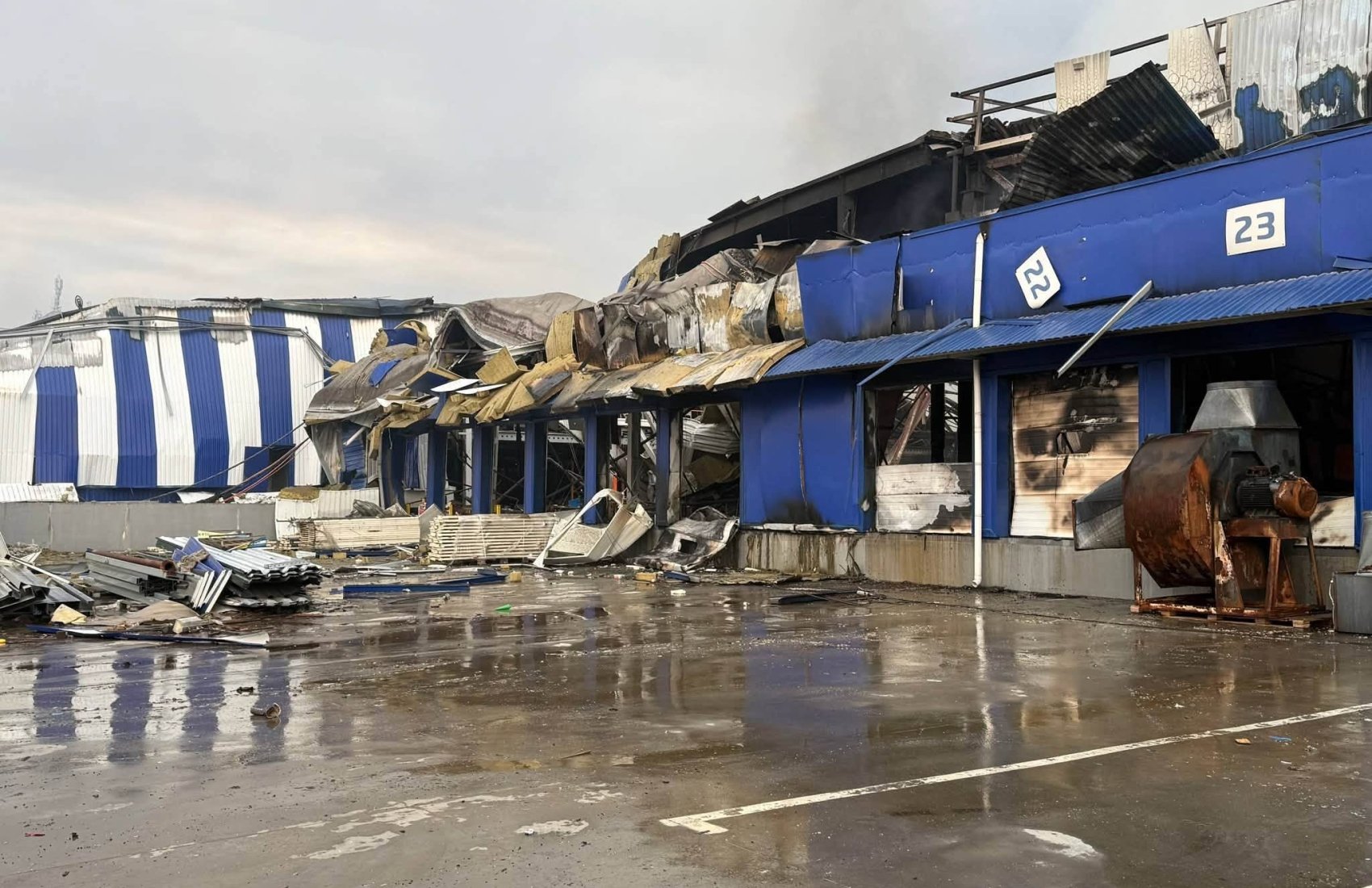
The Russians again began to attack the economic base of Ukraine – the largest domestic companies. Only on the night of August 5, several assets of Rozetka, Epicenter, Novus, Silpo and many others were destroyed or damaged at once. Prior to that, the enemy systematically hit the warehouses of the largest logistics company of Ukraine, Nova Poshta. “We are entering a new phase of war – the mutual destruction of economies,” says the co-owner of this logistics company, Volodymyr Popereshniuk.
In a situation where the allies actually leave us without protection against ballistics, Ukrainian business is forced to adapt to a new wave of attacks. What do entrepreneurs do? Delo editors collected examples of how companies are restructuring their work in response to increased Russian strikes.
A new wave of attacks undermines the capabilities of a huge number of companies. “As of the end of June, the warehouse market has suffered losses of 1,000,000 square meters since the beginning of the full-scale invasion,” Yaroslav Horbushko, director of Expandia’s capital markets department, said in a comment to LIGA.net. This figure is more than 50% of all warehouses in the capital.
Epicentr completely lost the ceramic tile production plant Epicentr Ceramic Corporation. “Production will be transferred to two of the company’s enterprises abroad,” Epicenter said.
Comfy explained how they changed the work of logistics: “We have reduced the presence of goods at the distribution center as much as possible, and currently it mostly works in the mode of a cross-dock platform – receiving and immediately sending the goods to the stores of the network without storage in the premises of the distribution center.”
Rozetka reported that it is rebuilding logistics processes after the latest attacks: “This is the third attack on the company’s infrastructure in the last week. The team is already working on eliminating the consequences and rebuilding logistics processes.”
Meanwhile, Ukrzaliznytsia is looking for alternative routes for cargo. “The company is already conducting negotiations with neighboring countries regarding the expansion of transit corridors. Some of the agricultural products are being redirected to the Danube ports, Romanian Constanta, as well as across the borders with Slovakia and Hungary,” Oleksandr Pertsovsky, chairman of the board of Ukrzaliznytsia, said in an interview with Bloomberg.
What should be done next?
Companies are already moving assets abroad and do not store goods for a long time in large logistics centers. In order to protect oneself from new attacks by the occupiers, there are three ways to do so – decentralization of hubs, diversification of remnants and mobility of logistics, according to Evgenia Loktionova, director of the UTG consulting company.
“Decentralization of hubs: replacing one large automated distribution center with a dozen smaller warehouses in different districts or regions. Diversification of balances: distribution of batches of the same product to different sites to avoid complete destruction of the assortment when hit. Mobility of logistics: setting up rapid redistribution of orders to backup points and alternative delivery routes in a matter of hours,” she notes.
This is what the business itself can do. But what can the government do? For example, help with insurance. “I would make war risk insurance compulsory for all businesses, subsidized by the funds of international partners (for example, the EU) by, conditionally, 50-70%”, – emphasizes the executive director of the Center for Economic Strategy, Hleb Vyshlinskyi.
But the government can do much more to support business. “In order to survive, the Ukrainian economy needs deregulation, in particular, simplification of international logistics, permits for construction and connection to networks, tax holidays for everyone whose property was destroyed by the enemy, and free economic zones in the front-line territories,” said Popereshniuk from Nova Poshta.
Government support
The Cabinet of Ministers has already instructed ARMA and the State Property Fund to hand over new warehouse premises to the affected business. In addition, entrepreneurs who have lost assets may be granted new loans. Decisions on the decentralization of international logistics and the expansion of the customs corridor are also being prepared for them. And another type of business support is risk insurance: the preparation of effective military risk insurance mechanisms with the aim of supporting international partners is ongoing.