
Control of trade and other activities of tenants during the war
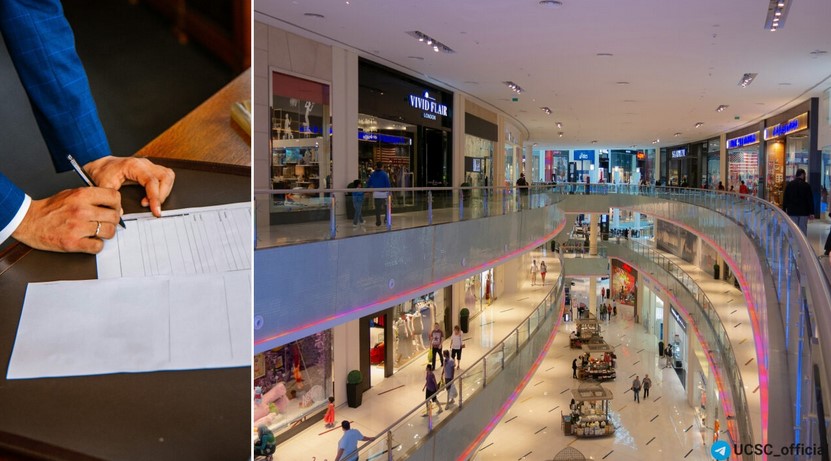
The full-scale invasion forced not only individual citizens to unite, but also the entire Ukrainian business. Malls provided unprecedented discounts for tenants to support them during this time, and retailers, in turn, did everything to provide goods to consumers.
Later, the situation in the rear regions of the country stabilized, and in some places even approached the pre-war level, so landlords began to gradually return to standard conditions.
However, not all tenants were ready to honestly report their affairs, and some even openly hid their turnover. The Ukrainian Council of Shopping Centers asked market experts and tells how often such cases occur, how developers should respond to them and what measures are in place to control activity.
The problem of concealing trade flows
The operational director of Budhouse Group (Nikolsky Kharkiv shopping center, Forum Lviv shopping center, Lubava shopping center in Cherkasy) Maksym Gavryushin states that such cases unfortunately happen.
As landlords introduce discounts on fixed rents during wartime, some tenants are tempted to cut back on turnover. First, to pay less rent from the turnover, and secondly, to show that discounts should be introduced in the future, because things seem to be going badly.
According to the expert, there are many means of detecting such schemes. These are control purchases, audits, and observations. If you set yourself a goal, it is very difficult to hide the turnover of goods, but it is not difficult to detect such violations, on the contrary.
“The reaction to such violations should be the harshest. Concealing the real turnover is in fact theft. Imagine the situation, the tenant comes to you, complains about hard times and bad trade, you give him a significant discount on the fixed rent and agree that he will pay the rent depending on the turnover. But the tenant provides a report with turnover 2 times less than the real one, and accordingly pays 2 times less rent. That is, using your loyalty, he deceives you. This is very unpleasant. Therefore, we usually terminate leases with such tenants. Fortunately, the absolute majority of our tenants are honest and reliable partners. But there are exceptions,” says the Operations Director of Budhouse Group.
Ihor Zabolotskyi, the leading expert of Colliers Ukraine in the commercial real estate segment, adds that during the resumption of operation of most shopping centers after the start of a full-scale invasion, the attention of landlords was directed to providing preferential lease terms with an emphasis on a percentage of turnover.
So, there are cases of concealment of real turnover, but experienced management companies, understanding the specifics of the business and having turnover indicators of all tenants, can detect and resolve such situations.
“Ultimately, understanding how the turnover in the facility changes actually determines and prompts landlords to adjust rental rates in accordance with the project’s performance. Each management company has a number of tools to identify and resolve such cases, one of which is the control procurement method. In particular, all tenants at the legislative level have an obligation to work through cash registers,” he explains.
Fair pay
Director of UTG Evgenia Loktionova notes that a significant indicator in the commercial real estate market is rent payment, which usually consists of the base rate + % of turnover + OPEX.
At the beginning of the war, when some shopping malls did not work, tenants were often released from financial obligations, except for NUTS. Subsequently, when work resumed, tenants and landlords agreed individually on payment. But usually, it was about discounts on the base rate or its cancellation while maintaining other payments. Even now, some tenants receive significant discounts on the fixed portion of the rent.
“But in order to determine a fair intermediate level of the fixed part for each tenant, the owners of shopping centers analyze turnovers and focus on them. Therefore, the owners of the shopping centers paid more attention to the control of the turnover of the tenants. The management companies analyze the indicators every month and adjust the payment arrangements according to the current situation. They have a contract with each tenant with a clear description of their controls and penalties. Therefore, periodic monitoring of the activities of each tenant is carried out,” says the expert.
However, in Loktionova’s opinion, why the real turnover is being hidden from the developers is a rhetorical question.
Methods of control of commodity circulation
Dmytro Gapon, deputy director of CBRE Ukraine’s evaluation and consulting department, is sure that control of the turnover of goods should be and is usually a normal practice for owners of commercial real estate.
Against the background of a difficult economic situation and lower attendance figures compared to the pre-war level, the number of cases where unscrupulous tenants can manipulate or hide the real volumes of their turnover has naturally increased.
The deputy director of CBRE Ukraine’s assessment and consulting department says that to check the volume of tenants’ turnover, owners of commercial real estate can resort to the following measures:
- Collection of data regarding the turnover of tenants on a daily and monthly basis (references, reports from cash registers, etc.) with their further analysis;
- Cross-checking of turnover volumes per 1 square meter. m with tenants from a similar segment and price category;
- Implementation of control purchases in the format of a secret buyer. During such measures, it is possible to check whether a purchase receipt is given to buyers at all and whether this purchase made by a mystery shopper is present in the daily turnover report from the tenant;
- Mass promotions and raffles initiated by the landlords themselves. Using this tool, owners have the opportunity to receive a sufficiently large sample of checks that came from buyers participating in the promotion, which also allows you to check whether the purchases are properly reflected in the reports of the tenants.
“Of course, in order to reduce the number of cases of concealment of turnover, owners of commercial real estate need to carry out actions to control it on a regular basis. An additional precautionary measure for such situations can be a clear definition in lease agreements of exactly what the tenant’s turnover should include (online purchases, cash and non-cash transactions, etc.), as well as the introduction of stiff fines for violations, including termination of the agreement. However, the best solution could probably be to refuse to cooperate with the tenant on the terms of additional payments from turnover and fixing only a fixed rental rate, if such a possibility exists”, – sums up the expert.